Sewage Backup Cleanup in Boca Raton, FL

A sewage backup is when wastewater from a drain, toilet, or the main sewer line flows back into the home instead of out of it. Sewage is Category 3 water under the IICRC S500 standard, which means it can carry harmful bacteria and needs trained handling. For sewage backup cleanup Boca Raton, FL homeowners have one safe first move: keep everyone out of the affected rooms and call to connect with a local professional.

The problem

What a sewage backup is, and why it is Category 3

The IICRC S500 standard sorts water into three categories. Category 1 is clean water from a supply line. Category 2 carries some contaminants, like appliance discharge. Category 3, often called black water, is grossly contaminated. Sewage sits in Category 3 because it can carry bacteria, viruses, and parasites from the waste stream.

That classification is not a scare tactic. It decides how a sewage cleanup service approaches the whole job: protective equipment for workers, containment so contamination does not spread to clean rooms, removal of porous material that cannot be made safe, and disinfection of the hard surfaces that remain. Sewage damage restoration follows the same logic after cleanup, rebuilding only on surfaces that test clean and dry.

A backup can arrive fast, through a shower drain or toilet during a storm, or slowly, with gurgling drains and sewer odor that build over days. Either way, the water itself is the hazard. Your job is distance and a phone call, not cleanup.
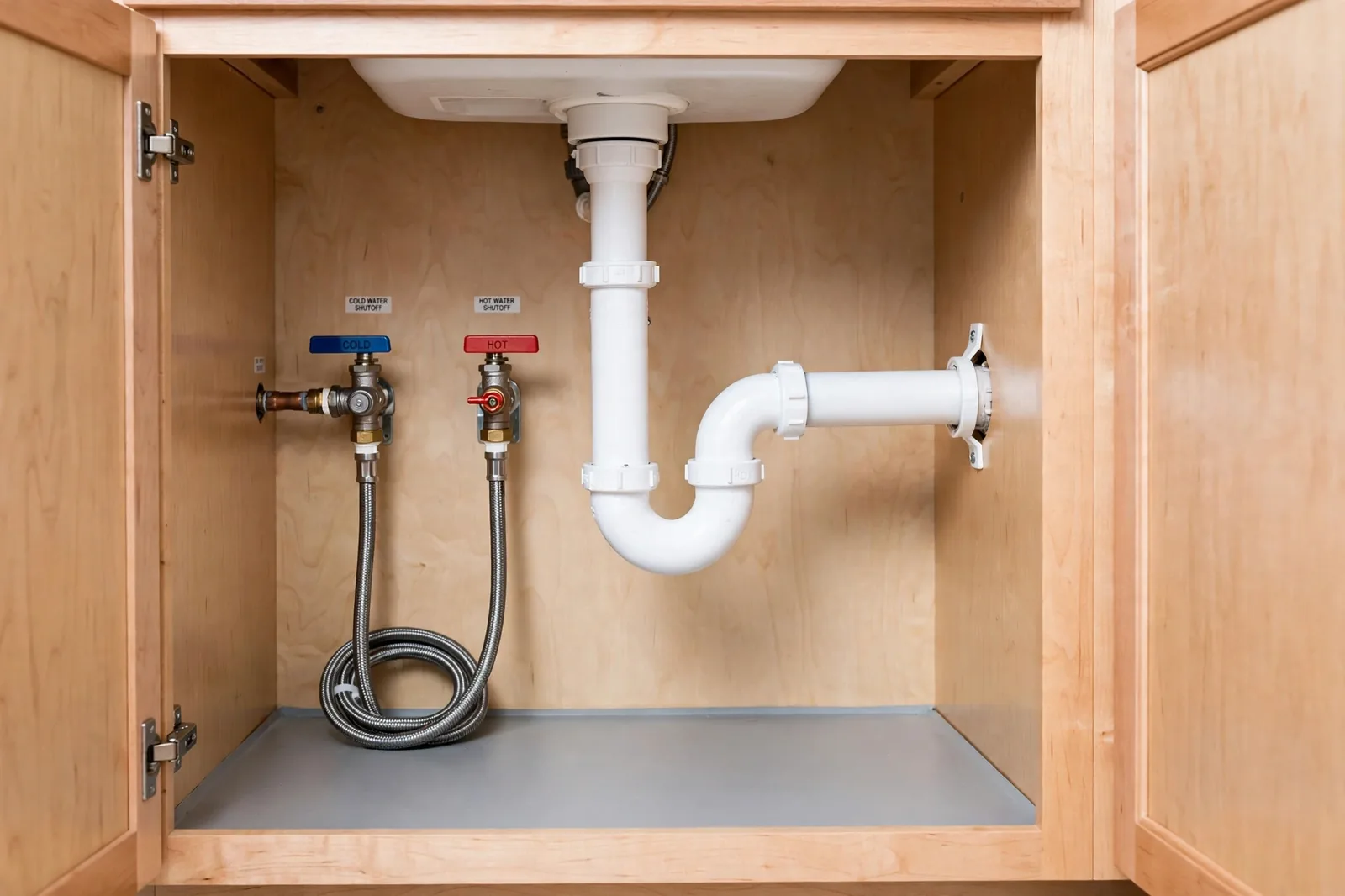
Clean drain plumbing under a sink, the kind involved in a sewage backup

Safety first: when to stop

No contact. Do not touch sewage water, and do not try to mop, scoop, or disinfect it yourself. Keep children and pets out of the affected rooms, and close the door if you can do it without crossing the water. Do not run an air handler if sewage is near a return vent, since moving air can spread contamination.

Stop using water in the home: no flushing, no running taps, no laundry or dishwasher. Each use sends more water toward a line that is already backing up. If you smell gas or a carbon monoxide alarm sounds, leave the home and call the gas utility or 911. Then call this number and say clearly that the water involves sewage.

Signs and causes

Signs a backup is building, and what causes it

Behind those signs, the usual causes are a blocked or damaged main sewer line, tree roots inside the line, or heavy rain overwhelming the drainage system so wastewater has nowhere to go but back. Boca Raton storms can push a marginal line into a full backup, which is why backups often appear during or right after intense rain.

Example situation: The guest shower, the lowest drain in the home, starts gurgling whenever the washing machine drains. That pattern usually points to a main line problem rather than a single clogged fixture. The safe move is to stop using water, keep out of the shower area, and call before the next load of laundry turns a warning into a flood of wastewater.

What you noticeLikely meaningSafe actionWhen to call
One slow sink drainLocal clog in that fixture's lineUse the fixture less; note if it worsensIf other fixtures start slowing too
Gurgling in several drainsMain line blockage buildingStop heavy water use, like laundryPromptly, before it backs up
Sewage odor indoorsBlocked vent or backup formingKeep out of low drain areasAs soon as you notice it spreading
Wastewater on the floorActive backup, Category 3 waterNo contact; keep people and pets outImmediately
General information

What a professional generally does on a sewage job

General information only. This describes how sewage cleanup is typically done in the trade. It is not a description of any one company.

1

Assessment with protective equipment

The professional assesses the affected rooms wearing protective equipment, confirms the source, and checks whether the backup is still active.

2

Containment

The work area is separated from clean rooms so contamination is not tracked or blown through the home during cleanup.

3

Removal of sewage and soaked material

Wastewater is extracted, and porous material it soaked, like carpet, padding, and sections of drywall, is removed and disposed of safely.

4

Cleaning and disinfection

Remaining hard surfaces are cleaned and disinfected. This step, not drying alone, is what makes the space safe to use again.

5

Drying and repair

Once the area is clean, structural drying brings moisture down, and repairs rebuild what was removed.

Do not wait

Risks of waiting on a sewage backup

Sewage does not become safer as it sits. Bacteria spread as the water spreads, and each hour gives contamination more time to soak deeper into flooring, baseboards, and wall bases. Materials that might have been cleaned on day one often have to be removed on day three. According to EPA guidance, mold can also begin growing within 24 to 48 hours in damp conditions, adding a second problem on top of the first.

The odor is not the main risk, but it is a useful signal: a strengthening sewer smell usually means the blockage is still there and still feeding the problem. Distance, no water use, and a call are the three moves that limit the damage.

Before you hire

What to ask a sewage cleanup contractor

Ask the contractor to confirm the license and insurance the job requires in Florida. Ask how they contain the work area and what protective steps their workers take with Category 3 water. Ask which materials they expect to remove, how waste is disposed of, and whether they follow IICRC S500 methods. Ask for the scope and any warranty terms in writing, and ask what the underlying line problem might need so the backup does not return.

Coverage

Covered Boca Raton ZIP codes

Calls are matched for homes in Boca Raton, FL, in Palm Beach County, within these covered ZIP codes:

334283343133432334333343433486334873349633498

Coverage details and how matching works are on the service areas page.

Questions

Frequently Asked Questions

Under the IICRC S500 standard, sewage is Category 3 water, the most contaminated class. It can carry bacteria, viruses, and other harmful material from the sewer system. That is why handling, protective equipment, cleaning, and disposal all follow stricter rules than a clean water job, and why homeowners are told to keep out of it.

A few drops at a fixture is one thing. Sewage that has spread across a floor, soaked into carpet, or pooled in a room is another. Once sewage touches porous material, home cleaning cannot make it safe again. Keep people and pets away from the area and call, and say clearly that the water involves sewage.

Common causes include a blocked or damaged main sewer line, tree roots growing into the line, a failing septic component in older setups, and heavy rain overwhelming the municipal system so water pushes back through drains. During South Florida storms, a backup can also follow surcharging in the street system beyond the home itself.

Early signs include gurgling sounds from drains, slow drainage in several fixtures at once, water appearing in a shower or tub when a toilet is flushed, and a sewer odor near floor drains. Those signs mean the line is struggling. Stopping water use in the home and calling early can keep a partial blockage from becoming a full backup.

Porous materials that sewage soaked, like carpet, padding, upholstered furniture, and mattresses, usually cannot be cleaned to a safe standard and are typically removed and disposed of. Hard surfaces can often be cleaned and disinfected. The professional sorts items by material and exposure, and can explain the reasoning for each decision on the call or at the visit.

It depends on the rooms involved. A backup contained in one bathroom with the door closed is different from sewage spread through living areas or near the HVAC system. Keep out of affected rooms, avoid running the air handler if sewage is near a return vent, and ask the professional who assesses your home to guide the decision.

You can, and the call is the right place for it. This website does not give estimates. When you call, ask the local professional how they handle estimates for sewage cleanup work, and describe the rooms and materials involved so they can explain what an assessment would cover.

Sewage in Your Home? Keep Out and Call

This is the one water problem where doing nothing yourself is the right move. Keep people and pets clear of the area, stop using water in the home, and call now to talk with a local professional about cleanup.

Call Now — (561) 555-0123