Ceiling water damage repair starts with finding the water above the ceiling, because a stain below almost always means a leak above. For ceiling water damage repair Boca Raton, FL homeowners are dealing with one of three usual sources: the roof, plumbing on the floor above, or AC equipment in the attic. If the ceiling is sagging or bulging, stay out from under it and call to connect with a local professional.
A ceiling is a floor seen from below, and water obeys gravity through it. Rain finds a worn spot in the roof during a Boca Raton storm and drips onto the ceiling drywall. An upstairs bathroom leaks at a toilet seal, a shower pan, or a supply line, and the water shows up one floor down. In many South Florida homes, the air handler sits in the attic, and its condensate line or pan can drip for weeks before a stain appears.
The tricky part is that water travels. It runs along joists and pipes and pools at low points, so the stain on your ceiling may sit several feet from the actual source. That is why water damaged ceiling repair begins with tracing the water, not with patching the stain. Fixing the visible spot while the source stays active just buys a second repair.
Homeowners searching for either term, ceiling water damage repair or water damaged ceiling repair, are describing this same job: stop the source, dry the structure, and restore the ceiling.
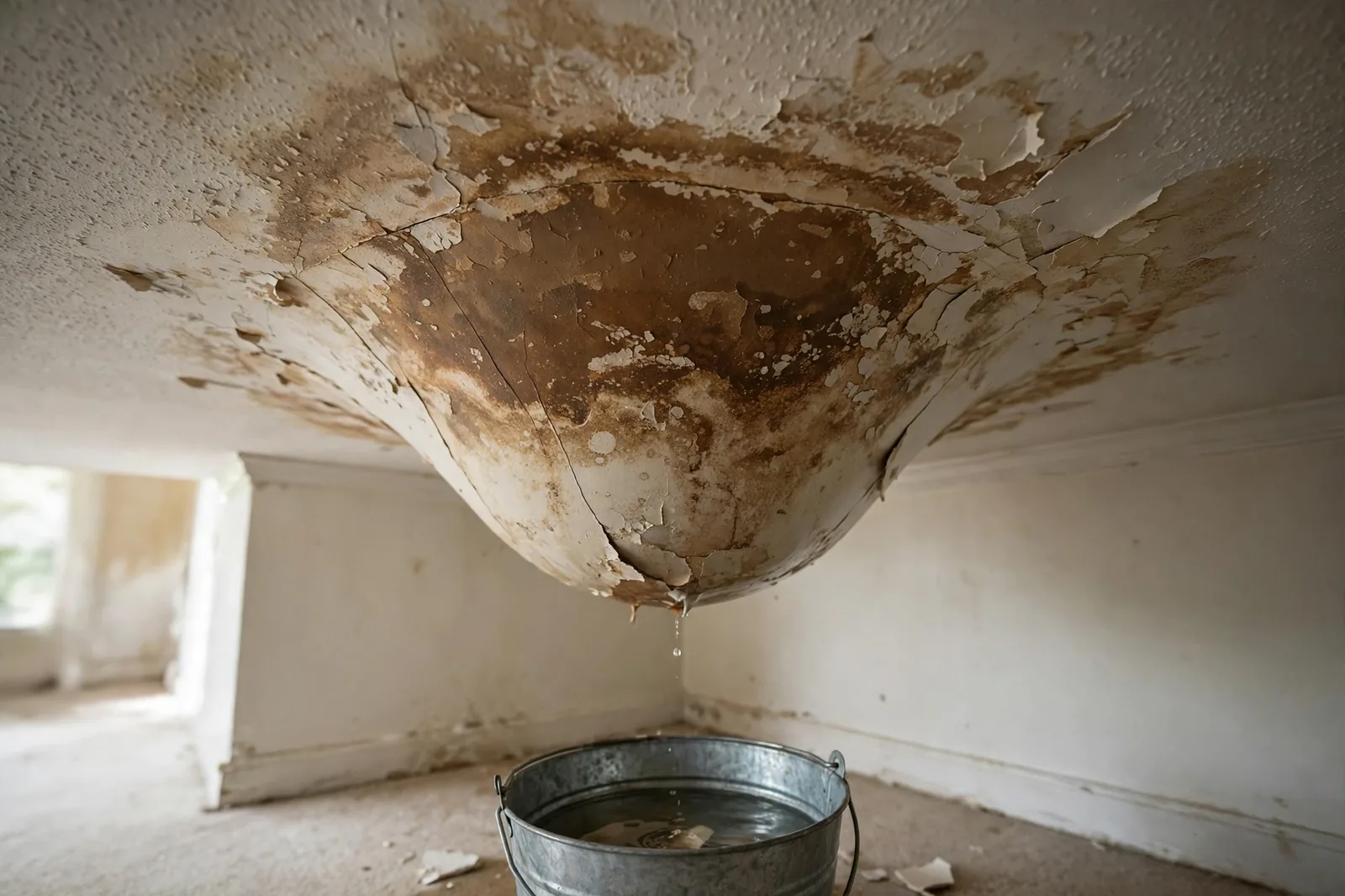
Stay out from under a sagging or bulging ceiling. Wet drywall is heavy and weak, and a loaded section can fall without warning. Do not poke, press, or drill the bulge to drain it. Keep people, pets, and furniture out of the area below.
If water is dripping through a light fixture or near one, do not touch the fixture or its switch. Never touch sewage water if an upstairs toilet or drain is the source. If you smell gas or a carbon monoxide alarm sounds, leave the home and call the gas utility or 911.
| What you see | Likely source above | Safe check | When to call |
|---|---|---|---|
| Stain grows during or after rain | Roof leak or flashing gap | Note the weather pattern when it grows | Once the pattern repeats, or right away if dripping |
| Stain below an upstairs bathroom | Toilet seal, shower, or supply line | Stop using that fixture and watch the stain | Promptly; fixture leaks rarely stop on their own |
| Damp spot that grows in AC season | Clogged condensate line or pan overflow | Turn the system off and keep the area clear | As soon as you notice it growing |
| Bubbling paint or a soft, spongy area | Ongoing slow leak soaking the drywall | Do not press hard on the soft area | Promptly, before the section weakens further |
| Sagging or bulging section | Pooled water loading the drywall | None; clear the room below | Immediately |
Example situation: A faint ring appears on the living room ceiling each summer and fades each winter. That seasonal pattern often points to the attic air handler sweating or its drain line clogging during heavy AC use, rather than the roof, which would follow rain instead. Naming the pattern on the call helps the professional start in the right place.
Safe checks are observation only: note when the stain grows, which fixture or system sits above it, and whether the area feels soft. Take photos over a few days if nothing is dripping or sagging. The moment water drips, paint bubbles widely, or the ceiling bows, the checking phase is over and the calling phase starts.
General information only. This describes how the work is typically done in the trade. It is not a description of any one company.
The leak above is identified, whether roof, plumbing, or AC, and stopped or isolated so no new water enters the ceiling.
Readings map how much of the ceiling and the cavity above it is wet, which decides what can dry in place.
Wet but sound material is dried. Drywall that stayed saturated, crumbled, or lost strength is cut out, along with soaked insulation above it.
New drywall is fitted, taped, and finished, then painted to match. Repairs start only after readings confirm the cavity is dry.
Skipping the drying step is the most common reason ceiling repairs fail. Fresh paint over a damp cavity blisters, and hidden moisture invites mold growth above the new surface. According to EPA guidance, mold can begin growing within 24 to 48 hours in damp conditions, which is why the readings, not the calendar, decide when a ceiling is ready to close up.
Ask the contractor to confirm the license and insurance the job requires in Florida. Ask how they will trace the source, since a repair without a source fix does not last. Ask which sections they expect to dry and which to replace, and how they confirm the cavity is dry before closing it. Ask for the scope and any warranty terms in writing, and ask who handles the source repair if it falls outside their trade, such as a roofing or plumbing fix.
Calls are matched for homes in Boca Raton, FL, in Palm Beach County, within these covered ZIP codes:
See the service areas page for the full list and how call matching works.
A stain usually means water is traveling through the ceiling from above: a roof leak, an upstairs pipe or fixture, or AC equipment in the attic. The stain marks where water pooled or dripped, which is not always directly below the source. Water follows joists and seams, so finding the true source takes a check of what sits above that spot.
Yes. Wet drywall absorbs water, gets heavy, and loses strength. A bulging or sagging section can give way and drop waterlogged material without much warning. Stay out from under it, keep furniture and people clear of the area below, and do not poke or press the bulge. Call and describe what the ceiling looks like.
Paint hides the stain, not the problem. If the source is still active or the drywall stayed wet, damage continues behind the paint, and mold can grow in the damp cavity. The sound order is: find and stop the source, dry the area with readings to confirm, then repair and paint. Ask the professional to confirm the area is dry before any cosmetic work.
Generally, the source is fixed first, then the wet area is dried. Drywall that stayed saturated or lost strength is cut out and replaced, while sections that dried fully and stayed sound may be kept. The repaired area is then taped, finished, and painted. The professional can explain which sections of your ceiling fall into each group after checking moisture levels.
Yes, it is a common Boca Raton pattern. Many homes have air handlers or condensate lines in the attic. A clogged condensate drain or an overflowing pan can drip steadily onto the ceiling below, often showing up as a stain that grows during the hottest, hardest-working AC weeks. Turning the system off and calling is the safe first response.
Treat it as an electrical hazard. Do not touch the fixture or the switch, and keep out of the water below it. If you can reach the breaker panel without standing in water, you may shut off that circuit. Otherwise, keep clear of the room and call, and mention the fixture when you describe the problem.
You can, and the call is the right place for it. This website does not give estimates. When you call, ask the local professional how they handle estimates for ceiling repair work, and what they need to check above and below the ceiling before talking numbers.
Ceiling damage rarely fixes itself, and a loaded, sagging section is a safety problem, not a cosmetic one. Call now to talk with a local professional about the source above your ceiling and the repair path below it.
Call Now — (561) 555-0123