Flood Damage Restoration in Boca Raton, FL

Flood damage restoration is the work of removing flood water, drying the structure, and cleaning or removing what the water touched. In Boca Raton, most flood calls follow intense rain, a storm, or water rising at doors and low entry points. If water from outside is inside your home, treat it as contaminated, keep out of it, and call to talk with a local professional about flood damage restoration Boca Raton, FL homes need after a storm.

The problem

What flood damage means

Flood damage is harm caused by water that came in from outside the home. Unlike a burst pipe, which releases water from a known clean source, flood water travels across soil, pavement, and landscaping before it enters. Along the way it picks up grit, bacteria, and chemicals, which is why flood cleanup service work follows stricter handling than a plain leak cleanup.

Under the IICRC S500 standard, water is sorted into categories by contamination. Clean supply-line water is Category 1. Water with some contamination is Category 2. Sewage and heavily contaminated water is Category 3. Flood water from outdoors is generally treated with Category 2 or 3 caution, depending on what it crossed and how long it sat.

The damage is also wider than the puddle you can see. Water wicks into drywall and insulation, runs under tile and laminate, and soaks the subfloor. A room that looks merely wet at the surface can hold moisture in the wall cavity for a long time if it is not opened up and dried with readings to guide the work.
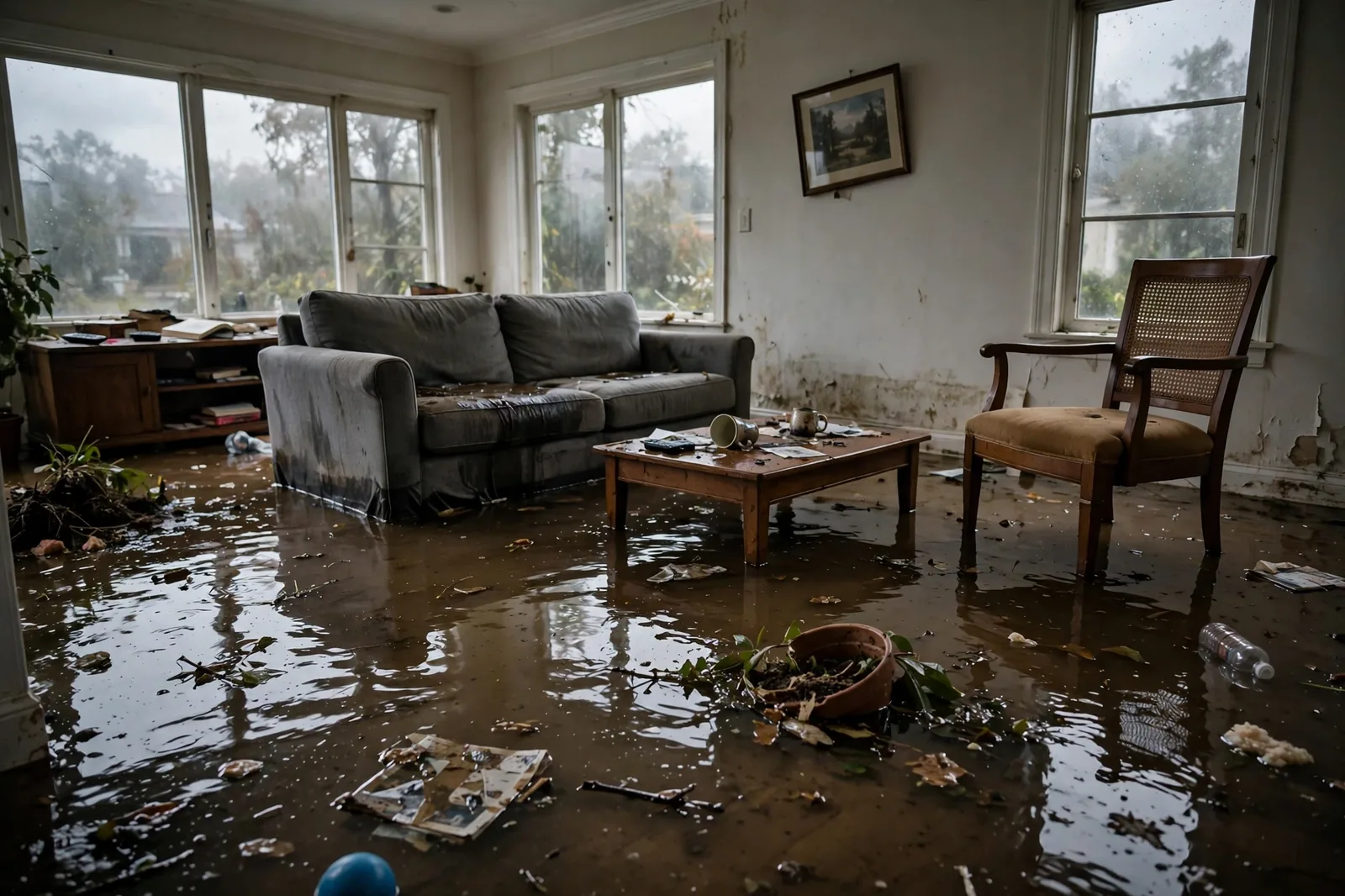
Flooded living room in a Boca Raton home after heavy rain
Signs and causes

How flood water gets into Boca Raton homes

Boca Raton sits in flat, low South Florida terrain with a high water table, so heavy rain can overwhelm drainage quickly. Common entry routes on flood calls include:

Example situation: After an afternoon storm, you find a shallow sheet of water across the tile in one corner room, darkest near the sliding door. That pattern usually means rain pooled outside and came in at the threshold, not a plumbing leak. The safe move is to keep out of the water, note how far it spread, and call.

What you seeLikely sourceSafe checkWhen to call
Water entering at a door during rainPooling outside, low thresholdLook from a dry spot; do not wade inAs soon as water is inside and spreading
Wet carpet far from any pipeSlab-edge seepage or rising groundwaterPress a dry towel at the edge to confirm dampnessIf the damp area keeps growing
Water with soil or debris in itOutside flood waterNone; keep people and pets outRight away; treat it as contaminated
Water near outlets or appliancesAny source, now a safety riskDo not touch; stay out of the roomImmediately, before anything else

Safety first: when to stop

Keep out of standing water near outlets, appliances, or a breaker panel, and never touch flood water with bare hands. If your home has a basement or crawl space, skip it: most Boca Raton homes are slab-on-grade, but any below-grade space that floods is a professional-only job. If you smell gas or a carbon monoxide alarm sounds, leave the home and call the gas utility or 911.

Safe steps are few: shut the main water valve only if you can reach it dry, move dry belongings out of the wet zone, and take photos for your records. Stop there and call.

General information

What a professional generally does on a flood job

General information only. This describes how flood work is typically done in the trade. It is not a description of any one company.

1

Assessment and moisture mapping

The professional checks where the water came from, how far it spread, and what it likely carries. Moisture readings map the wet materials, including inside walls.

2

Water removal

Standing flood water is extracted. Contaminated water is handled and disposed of with care, and the area is kept separate from clean rooms.

3

Removal of unsavable material

Porous material the flood water soaked, like soaked drywall sections, insulation, and padding, is usually removed because it cannot be cleaned safely.

4

Cleaning and antimicrobial treatment

Surfaces the water touched are cleaned, and an antimicrobial treatment may be applied where the trade standard calls for it.

5

Structural drying and monitoring

Air movers and dehumidifiers dry the structure. Readings over the following days confirm when materials are dry enough for repair.

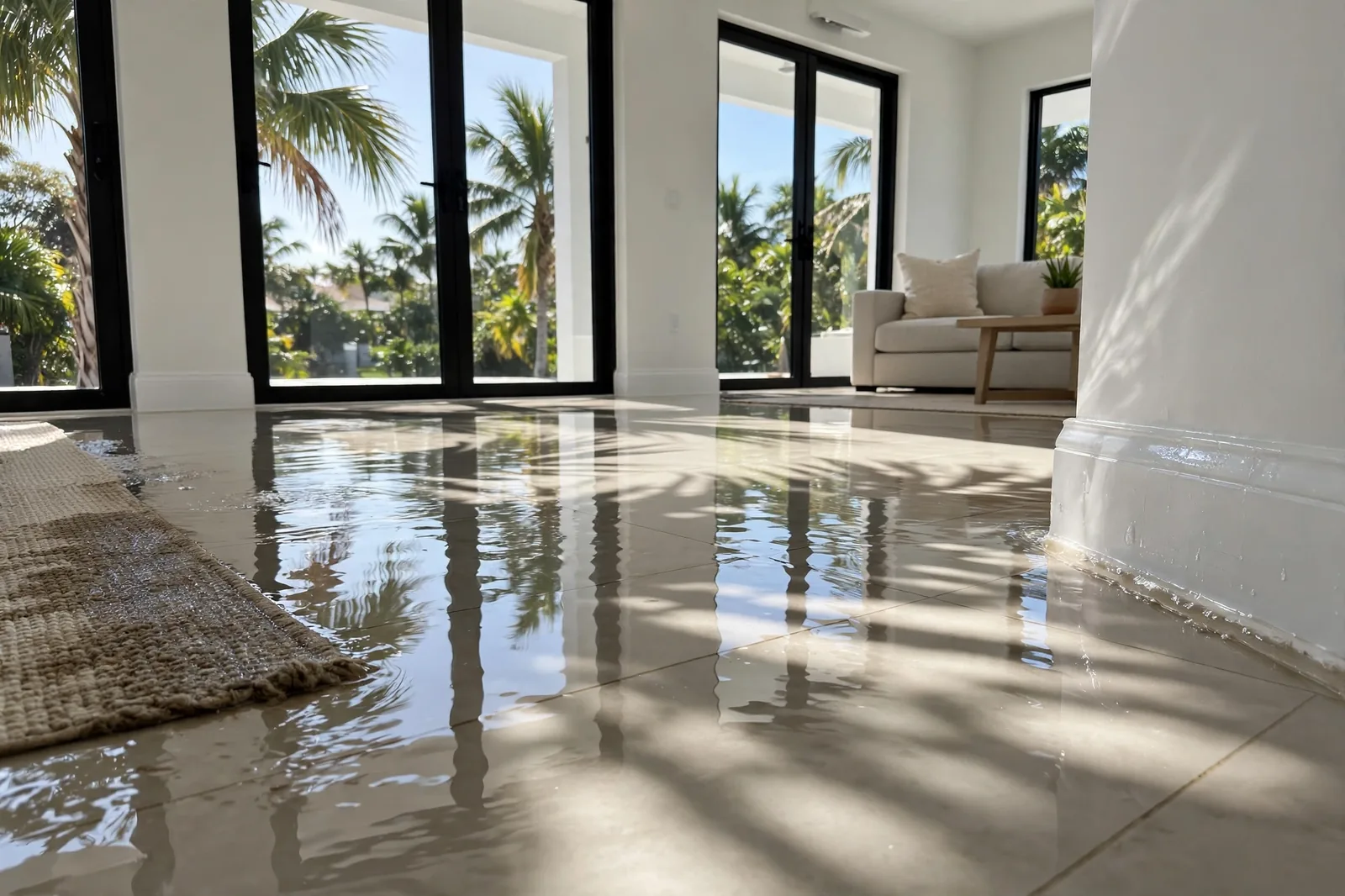
Water spreading across a living room floor in a Boca Raton home
Flood vs clean water

Why flood water is handled differently

A supply-line leak starts clean. Flood water does not. It may carry bacteria from soil and drains, residues from roads and lawns, and sharp debris you cannot see in murky water. That contamination changes the job: more material is removed instead of dried, cleaning matters as much as drying, and protective handling is part of the work from the first minute.

Time matters too. According to EPA guidance, mold can begin growing within 24 to 48 hours in damp conditions, and flood-soaked materials are a prime surface for it. The longer flood water sits, the deeper it travels and the more of the home it puts at risk. If you are weighing whether a flooded room is a mop-it-up job, treat murky or debris-filled water as a clear sign to call instead.

Before you hire

What to ask a flood contractor

Ask the contractor to confirm the license and insurance the job requires in Florida. Ask how they handle contaminated water and disposal, and which materials they expect to remove rather than dry. Ask whether they follow IICRC S500 methods, and how they will keep clean rooms separate from the work area. Ask for the scope and any warranty terms in writing, and keep notes from the call.

Coverage

Covered Boca Raton ZIP codes

Calls are matched for homes in Boca Raton, FL, in Palm Beach County, within these covered ZIP codes:

334283343133432334333343433486334873349633498

Outside these ZIP codes? This site focuses on Boca Raton only, so calls can be matched to the right local coverage. See the service areas page for how matching works.

Questions

Frequently Asked Questions

A leak usually starts inside the home, from a pipe, appliance, or roof. Flood damage comes from water entering from outside, like heavy rain, rising groundwater, or storm surge. Outside water picks up soil, debris, and contaminants on its way in, so it is handled with more caution than clean water from a supply line.

It can. Flood water is treated as contaminated because it may carry bacteria, chemicals, and debris from outdoors. That is why the safe approach is distance: keep people and pets out of flooded rooms, avoid contact with the water, and let a professional handle removal, cleaning, and disposal of materials the water soaked.

Stay out of the water, especially near outlets, appliances, or a breaker panel. If you can reach the main water valve or a breaker without standing in water, you may shut it off. Move dry belongings to a dry room if you can do it without crossing the water. Take photos for your records, then call and describe what you see.

It can. Water spreads under flooring and wicks into wall bases, so a flooded room often means damp material beyond the visible edge. Humidity also rises through the whole home while water sits. A moisture check maps how far the water actually traveled, which is why drying plans are based on readings rather than the visible waterline.

Porous items that flood water soaked, like upholstered furniture, mattresses, and cardboard, usually cannot be cleaned safely and are typically removed. Hard, non-porous items can often be cleaned and disinfected. When you call, describe what the water touched, and ask the professional how they sort what can be kept from what should go.

It depends on the depth of the water, how long it sat, and which materials it reached. Removing water is only the first step. Drying a soaked wall cavity or subfloor takes longer than drying a bare tile floor. The professional monitors moisture readings and adjusts as drying progresses, so the timeline is set by the readings, not by a guess.

You can, and the call is the right place for it. This website does not give estimates. When you call, ask the local professional how they handle estimates for flood work like yours, and what they need to see at the home before they talk numbers with you.

Flood Water Inside? Make the Call

Flood water will not get cleaner or shallower while you wait. Call now to talk with a local professional about the state of your home and the next step for your rooms, floors, and walls.

Call Now — (561) 555-0123